Truth and Reconciliation
Today is National Day for Truth and Reconciliation and Orange Shirt Day, but every day at Threshold we are reminded of the impacts of the residential school system. The data is staggering: the most recent PiT count showed people who identify as Indigenous comprised almost one third of the population surveyed. This is six times the proportion of Indigenous people among the total Canadian population.
In addition to disproportionate representation, Indigenous homelessness is experienced differently: First Nations communities are more likely to experience hidden homelessness, unsheltered homelessness, and homelessness in health or correctional systems. Hidden and unsheltered homelessness receives no supports or services, no access to care or community.
And on top of the painful and isolated experience, Indigenous respondents were more likely to report difficulties related to an acquired brain injury, substance use issues, deafness and blindness, physical mobility, learning, intellectual/developmental, or cognitive function, and illnesses or medical conditions. Chronic health issues that arose from structural racism and continue to extend across generations today.
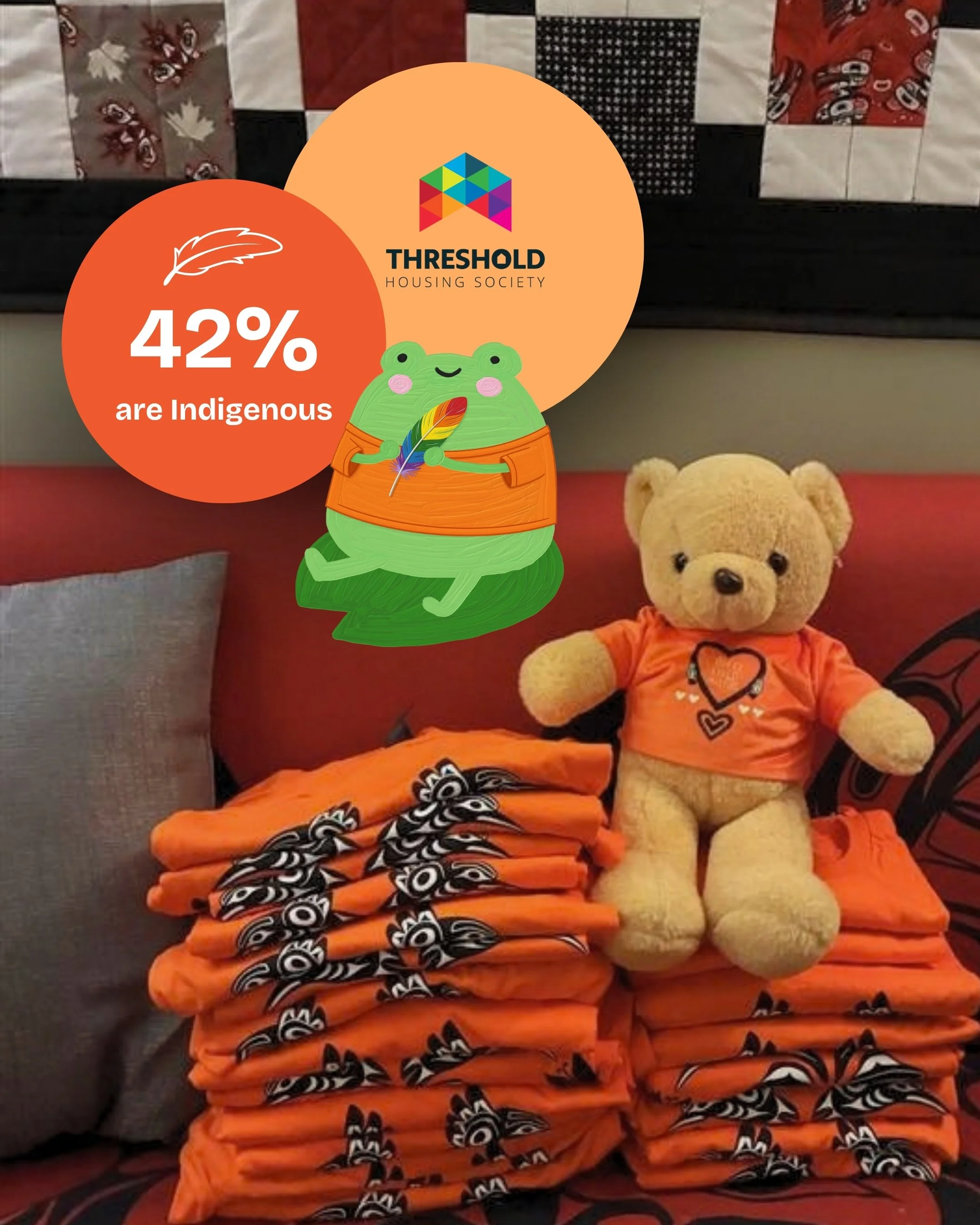
Last year, 42% of our youth were Indigenous, a 15% increase from the previous year.
Indigenous youth deserve access to safe and stable housing and the necessary care needed to heal from the generational trauma of residential schools. At THS, we know preventing homelessness among Indigenous youth requires far more than housing alone. Home is the first step to healing, but wraparound services are critical. We must walk alongside young people in ways that affirm their identities, rebuild trust, and connect them to culture, community, and a sense of purpose.
Our two Indigenous Wellness Advocates provide individualized, one-on-one support to Indigenous youth. Their work includes advocacy at appointments and systems, navigating resources, grocery shopping and life skills support, goal setting and achievement, and assistance with building community connections and strengthening cultural identity. We work closely with Indigenous communities throughout Victoria to create meaningful cultural opportunities for youth, facilitating workshops and events such Elder visits, beading, frybread making, and cultural performances, supporting connection to culture, community, and tradition.
Today we wear orange, a symbol of the loss of culture, freedom, and self esteem that Indigenous youth experienced at the hands of residential schools. We stand with our youth on their journey toward truth, healing, and reconciliation, and encourage our community to continue to remember every child matters every day.